
Your US practice should not depend on Psychology Today to find clients.
Psychology Today dominates how US therapists get found. Therapists and practices in California, New Jersey, Texas, and Florida are building search visibility that does not disappear when a directory changes its algorithm.
You built a practice in one of the most competitive therapist markets in the world, and a directory still decides whether new clients find you. That's not a reflection of how good the work is. It's a reflection of who currently owns the space between a client's search and your website.
SEO for therapists in the United States means building search visibility on a domain you own, so clients searching for what you treat find your practice instead of a directory. Two US practices that started from near zero grew their daily search impressions inside five weeks. This page shows what changed and how the same work applies to a solo practice or a multi-state telehealth practice.
Last updated: May 2026
Written by Manuel Otter, founder of HarborVisibility, working with therapists and group practices to build owned search visibility.
Where most US practices are stuck
Three reasons clients searching right now do not find you.
A declining directory
The Psychology Today referral decline is documented and accelerating. Practitioners who changed nothing about their listing have watched their inquiries fall.
No presence you own
Most US therapists have no owned search presence. Their website ranks for their name and nothing else, so new clients never find them by what they treat.
Directories win the search
When a client searches "EMDR therapist San Francisco" or "trauma therapist New Jersey", directories appear, not the practitioner's own site.
What gets built
Three specific deliverables. Done for you, not handed to you as instructions.
The Groundwork That Makes You Readable
Every page named and structured so Google can tell what you treat, who you help, and where, from your headings down to the words that show up in a search result. The part clients never see, and the part everything else rests on.
Making You Legible to Google and AI
Structured data behind the scenes that tells Google and AI tools exactly who you are, what you specialize in, and where you work, plus a Google Business Profile set up with the right category, services, and description.
Getting You Indexed and Listed Correctly
Your site registered and submitted properly with Google, plus your name, credentials, and practice details made consistent everywhere they appear online, so nothing contradicts itself and confuses either Google or a prospective client.
Case studies
Real US practices, measured in weeks
Verified Google Search Console data from two independent practices.
8 to 120+
daily search impressions in five weeks
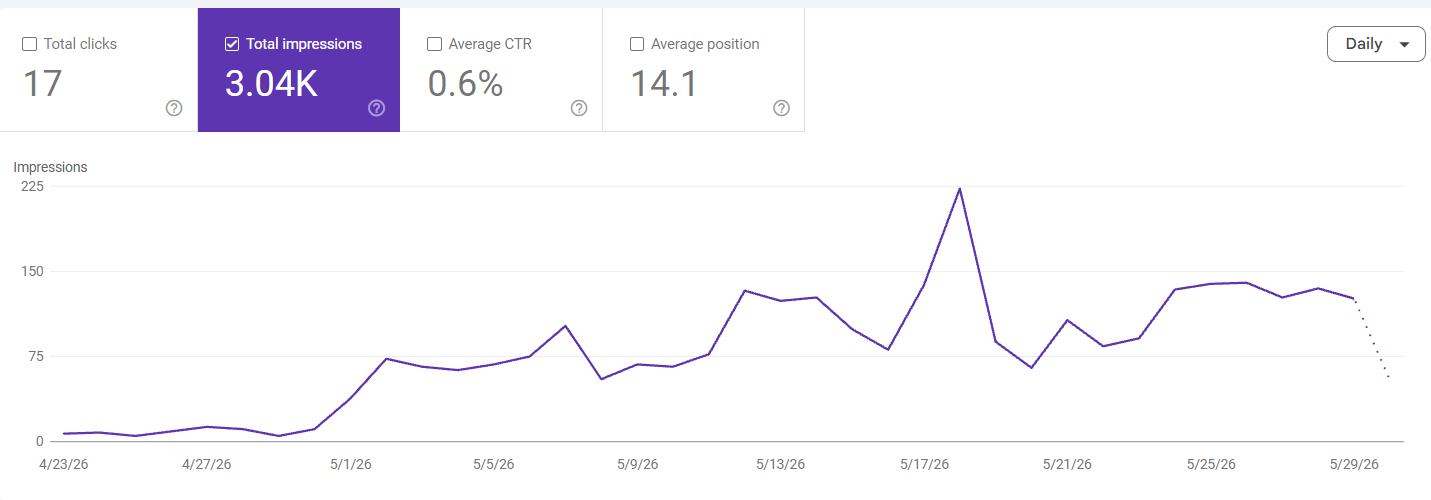
Built from a near-zero baseline: a complete EMDR content cluster of five service pages and four blog posts, linked together in a hub-and-spoke structure. As the cluster grew, the practice began appearing for a wider range of EMDR and trauma searches across San Francisco.
Shayan Salar, LPC
Trauma, anxiety, substance use, and ketamine-assisted therapy integration
New Jersey, licensed across NJ, PA, FL, and TX
alchemypsychotherapy.comUnder 10 to 70+
daily search impressions in five weeks
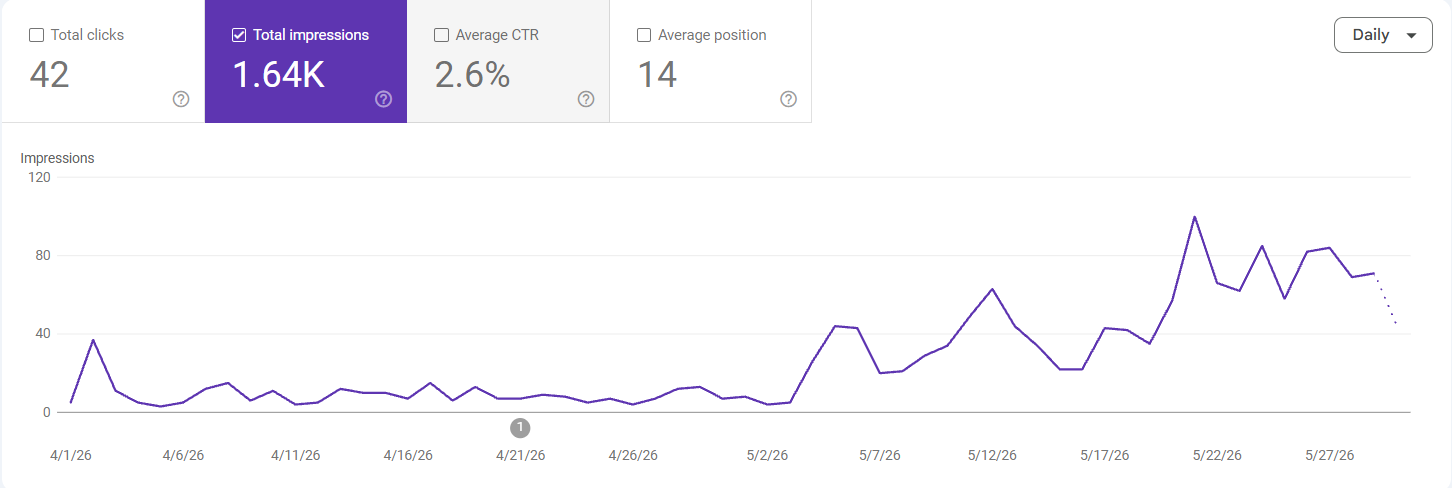
Trauma-informed therapy content built for a telehealth practice serving four states from one website. A trauma-informed therapy page reached position 8 on Google within weeks of publishing.
What makes the US market different
Three factors that shape how US clients find a therapist.
Psychology Today is losing ground
Psychology Today is the dominant US therapist directory, and its referrals have been declining since 2023.
Multi-state licensing multiplies your reach
Multi-state telehealth licensing creates parallel keyword geography. A practice licensed in New Jersey, Pennsylvania, Florida, and Texas can rank for location-specific queries in all four states from a single website.
US clients search on Google Maps
US clients lean on Google Maps and Google Business Profile to find a therapist. A complete visibility foundation covers both, and it keeps you visible to AI tools like ChatGPT and Perplexity when clients ask them for a recommendation.
Frequently asked questions
Start with a visibility snapshot
A concise review of your current setup with structured next steps. Private. No obligation.
Prefer to write first? Get in touch.